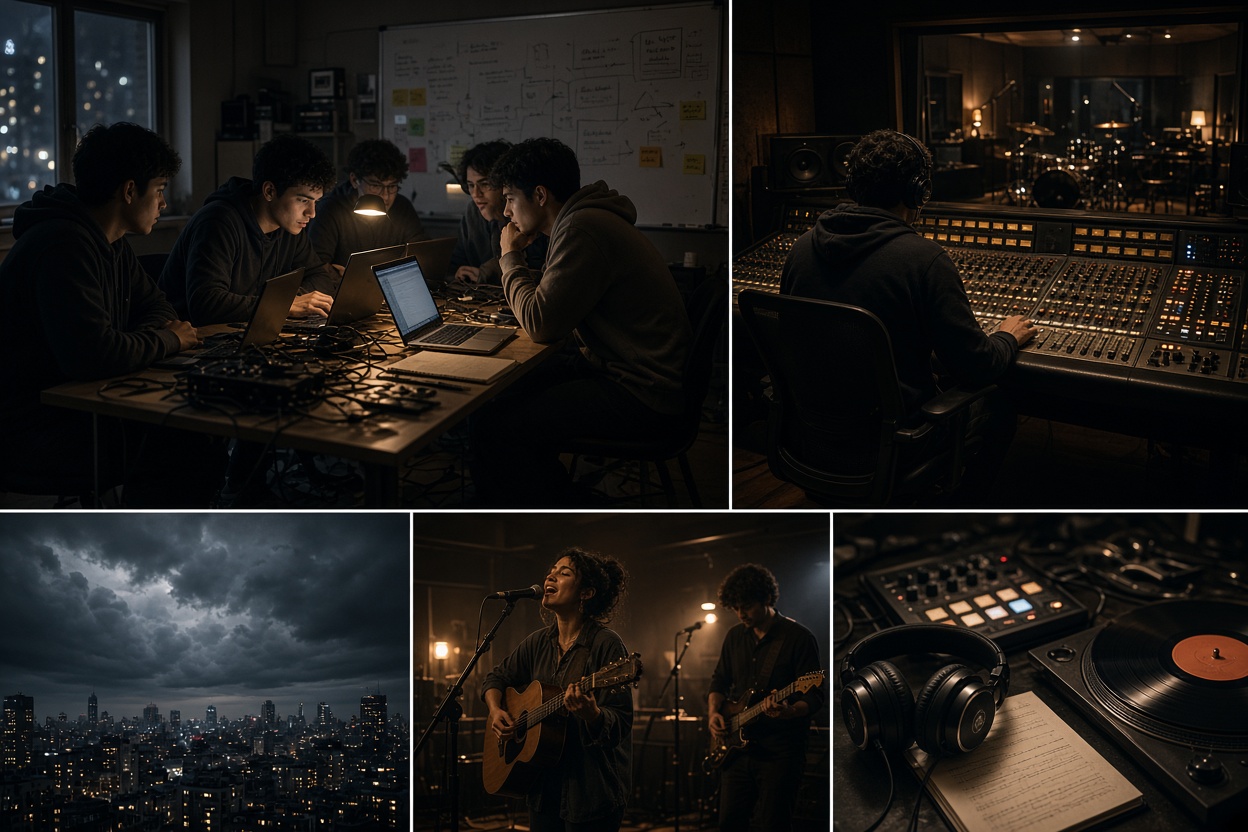
In early 2022 a handful of MIT-trained engineers gathered in a cramped Boston apartment to solve one stubborn problem: could an AI learn to compose complete songs from nothing more than a text prompt? The prototype they built could hum simple melodies, yet the team sensed something larger. Within months that experiment became Suno, an app now used by millions to generate radio-ready tracks in seconds. The story of Suno is not merely about clever code; it is a record of calculated risks, quiet pivots, and the sudden collision between artificial creativity and an industry built on human authorship.
Founders Mikey Shulman and Keenan Swanson had previously worked on speech synthesis at major labs. They understood that audio generation required both linguistic understanding and musical structure. Early tests revealed that models trained only on text produced coherent lyrics but tuneless audio. The breakthrough arrived when the team fused a large language model with a latent diffusion system for spectrograms. Suddenly the app could output verses, choruses, and instrumental breaks that followed pop conventions. Word spread on Discord servers; beta invites became status symbols. By spring 2023 Suno had raised its first major round and moved into a proper office, yet the founders still ate lunch at the same scratched table where the first model had been trained.
The First Public Demo and Immediate Backlash
When Suno opened its web app to the public in April 2023, the reaction was instantaneous and polarized. TikTok clips of AI-generated pop songs racked up millions of views overnight. Traditional songwriters flooded Twitter with accusations of theft, claiming the model had ingested copyrighted material without permission. Suno responded with a transparency report listing training sources but refused to release the full dataset. Legal scholars noted the move echoed earlier battles over sampling; the company argued fair use because outputs were transformative. The controversy only increased sign-ups, proving that public debate could be the most effective marketing channel for an emerging AI tool.
Technical Architecture Behind the Scenes
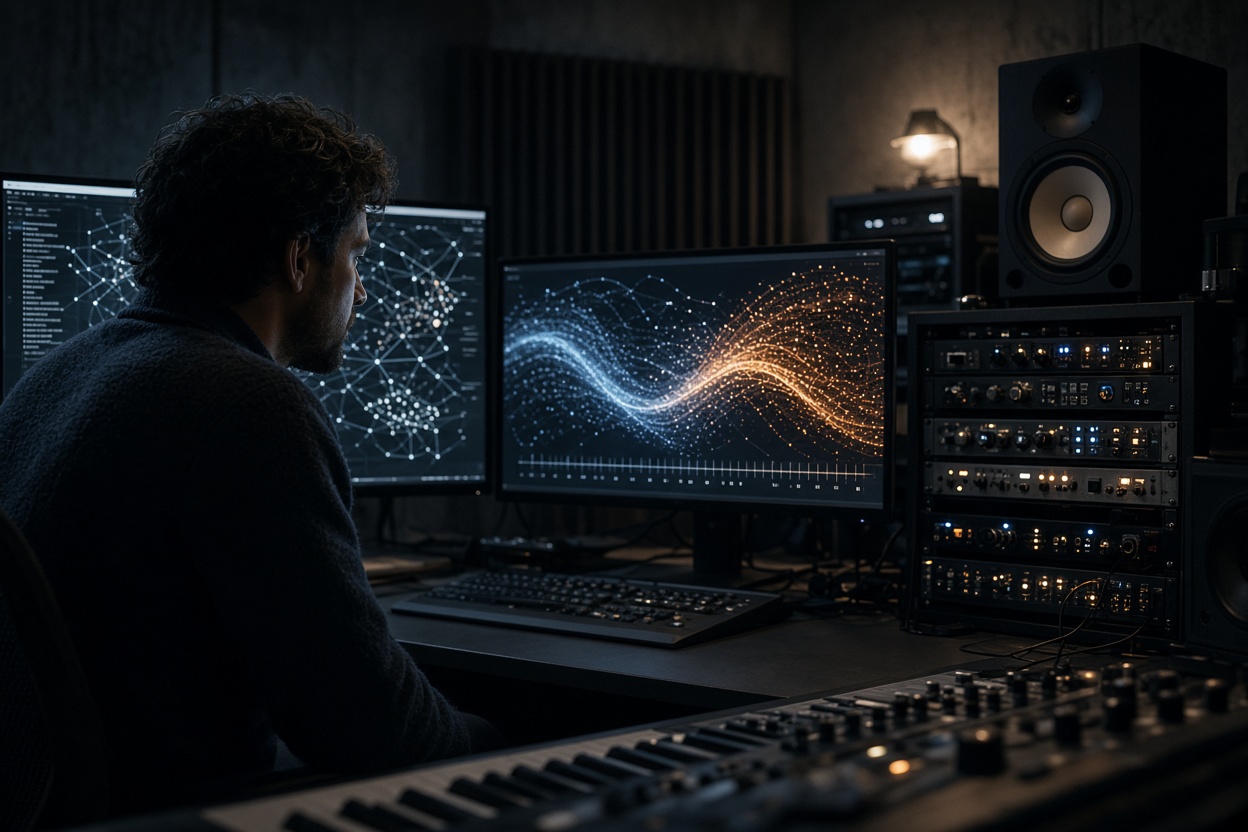
Suno’s pipeline begins with a 3-billion-parameter language model fine-tuned on lyric corpora across genres. That model produces structured lyrics and a high-level arrangement plan. A second stage converts the plan into a sequence of audio tokens using a custom diffusion transformer. The final vocoder renders 48 kHz stereo audio. Latency dropped from forty-five seconds per song in 2022 to under twelve seconds today through aggressive quantization and distillation. The team also introduced style tokens that let users steer genre, mood, and instrumentation without writing long prompts. These engineering choices turned a research demo into a product that feels responsive enough for iterative creative work.

The Funding Decision That Changed Scale
In late 2023 venture firms offered Suno a $50 million Series B at a $200 million valuation. The founders faced a classic dilemma: accept rapid growth or maintain control. They chose the former after internal modeling showed competitors were weeks from launching similar products. The capital funded a 40-person team, new GPU clusters, and a mobile app that removed the last friction for casual users. Within six months daily generations crossed ten million. The decision accelerated product velocity but also attracted regulatory scrutiny from both the Copyright Office and European data-protection authorities.
Artist Reactions and the First Lawsuit
Grammy-winning producer Linda Perry publicly tested Suno and declared it “scary good” at mimicking her vocal style. Days later three major labels filed suit alleging unauthorized use of their catalogs. Suno countered that outputs never reproduce protected recordings verbatim. The case is still pending, yet the litigation forced the company to add an opt-out mechanism for rights holders. Independent artists split into two camps: those who embraced Suno as a sketching tool and those who viewed it as a threat to entry-level gigs. The divide revealed a generational split more than a stylistic one.
Turning Point: The Mobile Launch and Viral Growth
The January 2024 iOS release removed the requirement for a desktop browser and integrated social sharing. A single share-to-TikTok button turned every generated track into potential viral fuel. Downloads hit one million in the first week. Suno’s servers strained under the load; the engineering team ran an all-night migration to new GPU instances in three regions. The mobile moment proved decisive: casual users who would never open a web app now carried an AI band in their pocket, normalizing the idea that anyone could be a songwriter.
Business Model Evolution and Creator Revenue Share
Initially free, Suno introduced a paid tier after burn rate climbed. The subscription included commercial rights and higher generation limits. In a surprise move the company also launched a revenue-share program that pays users whose tracks accumulate streams on external platforms. Early data shows the top 1 percent of creators earning several thousand dollars monthly. This hybrid model attempts to convert potential adversaries into stakeholders, though critics argue the payouts remain modest compared with traditional publishing deals.
Global Expansion and Cultural Adaptation
By mid-2024 Suno supported 28 languages and regional musical idioms from reggaeton to K-pop. Localization required more than translation; the team curated local lyric datasets and hired genre consultants in Seoul, Lagos, and São Paulo. The strategy paid off: non-English usage now accounts for 47 percent of generations. Governments in several countries began studying Suno as a case study in creative-industry disruption, prompting new policy discussions around AI authorship and moral rights.
The Road Ahead: Regulation, Ethics, and Long-Term Vision
Suno’s leadership has stated publicly that watermarking every generated clip is technically feasible and will be mandatory within a year. They also plan an API tier for professional DAWs. Internally the team debates whether to open-source core models or keep them proprietary. The choice will shape not only Suno’s valuation but the broader ecosystem of AI music tools. Whatever path they select, the precedent set by this small Boston startup will influence how future companies balance innovation with accountability in the creative domain.
Suno didn’t just build a tool; it forced the entire music industry to confront what ownership means when creation itself can be automated.
We are still in the earliest innings. The next five years will determine whether AI becomes a collaborator or a replacement for human artists.
Suno’s trajectory from apartment prototype to global platform illustrates how quickly artificial intelligence can compress decades of creative labor into seconds. The company’s choices—about data, funding, openness, and compensation—will echo far beyond any single song. Listeners may never again know whether the hook that moves them was written by a human or by an algorithm trained on millions of human works. That uncertainty is now the permanent backdrop against which the future of music will be composed.


Comments
Sign in to comment, like and save posts.
Sign inLoading comments…