In the dimly lit office of a Buenos Aires startup in 2015, a young Argentine developer named Guillermo Rauch was about to make a decision that would change the internet forever. He had just sold his previous company, LearnBoost, to WordPress, and now he was staring at a problem that kept him awake at night: deploying web applications was still painfully difficult. Little did he know that his obsession with this problem would lead to the creation of Vercel, a company that would eventually be valued at $9.3 billion and fundamentally transform how the web is built.
Chapter 1: The Genesis - When Zeit Was Born (2015-2016)
The story begins not with Vercel, but with Zeit. In German, 'Zeit' means 'time,' and Rauch chose this name deliberately. He believed that developers were wasting too much time on deployment infrastructure when they should be building products. The vision was audacious: make deployment so simple that it would take zero configuration and zero time.
I wanted to create a world where you could go from idea to URL in seconds, not hours or days. Every minute a developer spends configuring servers is a minute stolen from innovation.
Rauch wasn't alone in this mission. He assembled a small but brilliant team of engineers who shared his frustration with the status quo. Among them was Malte Ubl, a former Google engineer who had worked on AMP (Accelerated Mobile Pages), and Tony Kovanen, a Finnish developer with a passion for developer experience. Together, they began building what would become 'now,' a command-line tool that would revolutionize deployment.

The first version of 'now' was deceptively simple. You typed 'now' in your terminal, and your application was deployed. No configuration files. No complex setup. No waiting. It was magical, and developers immediately fell in love with it. Within weeks of its launch in late 2015, thousands of developers were using it. The developer community on Twitter exploded with excitement, sharing screenshots of their deployment times: 3 seconds, 5 seconds, 10 seconds. It was unprecedented.
The Socket.io Legacy
But to truly understand Rauch's genius, we need to go back even further. Before Zeit, Rauch had created Socket.io, a real-time communication library that became one of the most popular JavaScript libraries in history. Socket.io powered real-time features for companies like Microsoft, Trello, and Zendesk. This experience taught Rauch two crucial lessons: first, that developer experience was paramount, and second, that open source could be a powerful business strategy.
Socket.io had millions of downloads, but Rauch struggled to monetize it. He learned that while developers loved free tools, businesses would pay for infrastructure that made their lives easier. This insight would become the foundation of Zeit's business model: give developers incredible free tools, then charge companies for the infrastructure to run them at scale.
Chapter 2: The Next.js Revolution (2016-2018)
In October 2016, Zeit made a move that would define its future: they open-sourced Next.js, a React framework that made server-side rendering simple. This wasn't just another framework; it was a complete rethinking of how React applications should be built. The timing was perfect. React was exploding in popularity, but developers were struggling with complex build configurations, routing, and server-side rendering.
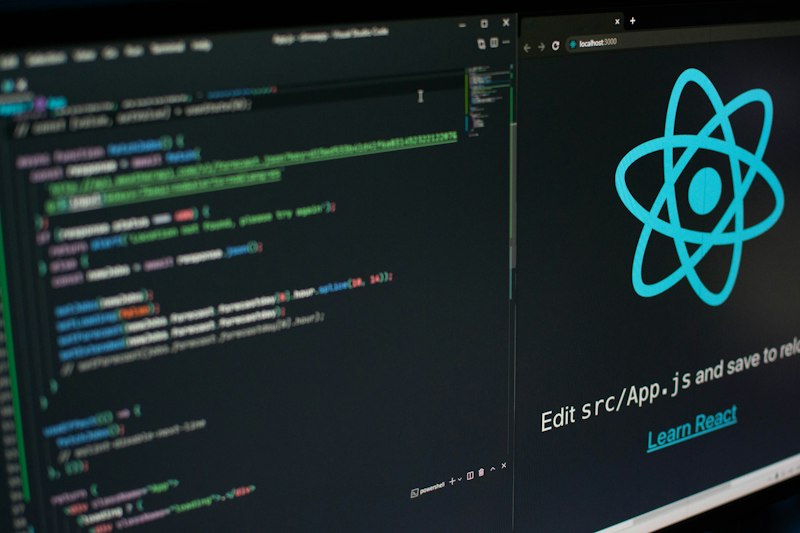
Next.js wasn't just a framework. It was a philosophy: convention over configuration, performance by default, and developer happiness as a first-class concern.
The launch of Next.js was a masterclass in developer marketing. Rauch didn't just release the code; he told a story. He showed how Next.js solved real problems that every React developer faced. He demonstrated it at conferences, wrote detailed blog posts, and engaged directly with the community. The response was overwhelming. Within months, companies like Netflix, Uber, and Twitch were experimenting with Next.js.
But here's where Rauch's strategy became brilliant: Next.js was free and open source, but it was optimized to run on Zeit's infrastructure. Developers would fall in love with Next.js, build their applications with it, and then naturally choose Zeit for deployment because it offered the best experience. It was a trojan horse strategy, but one that genuinely provided value at every step.
The First Major Funding Round
In 2017, Zeit raised $7 million in Series A funding led by Andreessen Horowitz. This was a pivotal moment. Marc Andreessen himself was impressed by Rauch's vision and the rapid adoption of both 'now' and Next.js. The funding allowed Zeit to expand its team and infrastructure, but more importantly, it validated the company's approach in the eyes of the broader tech industry.
With this funding, Zeit began to scale aggressively. They hired more engineers, expanded their infrastructure globally, and started building enterprise features. But they never lost sight of their core mission: making deployment simple and fast. Every feature they added had to pass the 'Zeit test': Does this make developers' lives better? If the answer was no, it didn't ship.
Chapter 3: The Rebrand - From Zeit to Vercel (2020)
By 2020, Zeit had grown significantly, but Rauch faced a new challenge: the name 'Zeit' was confusing for English speakers, and it didn't clearly communicate what the company did. After months of deliberation, the team made a bold decision: they would rebrand to Vercel, a name that combined 'velocity' and 'excellence.'

Changing our name was terrifying. We had built so much brand equity as Zeit. But we knew that to reach the next level, we needed a name that resonated globally and clearly communicated our mission.
The rebrand was executed flawlessly. Vercel didn't just change its name; it refined its positioning. They were no longer just a deployment platform; they were 'The Frontend Cloud.' This positioning was genius because it carved out a new category. AWS was the infrastructure cloud, Heroku was the application cloud, and Vercel was the frontend cloud. It was clear, differentiated, and aspirational.
The rebrand coincided with a $21 million Series A funding round (their second major round, despite the Series A designation) led by Accel. This brought their total funding to $33 million. But more importantly, it marked a shift in how Vercel positioned itself: they were no longer competing with Netlify and other deployment platforms; they were competing with the entire traditional web infrastructure stack.
Chapter 4: The Pandemic Boom (2020-2021)
The COVID-19 pandemic was a turning point for Vercel. As companies rushed to move online, the demand for fast, reliable web infrastructure exploded. Vercel was perfectly positioned to capitalize on this trend. Their infrastructure could handle massive traffic spikes, their deployment process was fast enough for rapid iteration, and their developer experience was unmatched.
During this period, Vercel signed some of its most important customers. Companies like HashiCorp, McDonald's, and The Washington Post chose Vercel to power their web presence. These weren't just small startups; they were established enterprises with millions of users. Each win validated Vercel's enterprise readiness and opened doors to even larger customers.

In December 2020, Vercel raised a massive $40 million Series B round led by GV (Google Ventures). This was a statement: Google itself was betting on Vercel's vision of the future of web development. The round valued Vercel at over $300 million, a significant jump from their previous valuation. But Rauch wasn't satisfied. He knew that to truly transform the web, Vercel needed to think even bigger.
The Next.js 10 Launch
In October 2020, Vercel launched Next.js 10, a major milestone that introduced several groundbreaking features: built-in image optimization, internationalization, and analytics. But the most important feature was something called 'Incremental Static Regeneration' (ISR), which allowed developers to update static content without rebuilding their entire site. This was a game-changer for large-scale applications.
ISR solved a problem that had plagued static sites for years: how do you get the performance benefits of static generation with the freshness of server-side rendering? We found a way to have both.
The launch of Next.js 10 was accompanied by a virtual conference called Next.js Conf, which attracted over 30,000 developers. This wasn't just a product launch; it was a movement. Vercel was building a community of developers who believed in their vision of the future of the web. And that community was growing exponentially.
Chapter 5: The Unicorn Journey (2021-2022)
In June 2021, Vercel achieved unicorn status with a $102 million Series C round led by Greenoaks Capital. The round valued the company at $1.1 billion, making it one of the fastest-growing developer tools companies in history. But this was just the beginning. The funding allowed Vercel to expand aggressively into enterprise sales, international markets, and new product categories.

The unicorn round was followed by rapid expansion. Vercel opened offices in San Francisco, New York, and Berlin. They hired aggressively, bringing in talent from companies like Google, Facebook, and Amazon. The team grew from 50 people to over 200 in just 18 months. But despite this growth, Vercel maintained its culture of developer-first thinking and rapid iteration.
In November 2021, Vercel raised another $150 million in Series D funding led by Bedrock Capital and Geodesic Capital. This round valued the company at $2.5 billion, more than doubling its valuation in just five months. The speed of this growth was unprecedented in the developer tools space. Investors were betting that Vercel would become the default platform for frontend development, much like AWS had become the default for backend infrastructure.
The Edge Runtime Revolution
In 2021, Vercel introduced Edge Functions, a new way to run code at the edge of the network, closer to users. This wasn't just an incremental improvement; it was a fundamental rethinking of how web applications should work. Instead of running all code in centralized data centers, Edge Functions distributed computation globally, reducing latency and improving performance.
The edge is the future of the web. Every millisecond of latency matters, and the only way to achieve truly fast experiences is to run code as close to users as possible.
Edge Functions were powered by V8 isolates, the same technology that powers Chrome. This allowed Vercel to start functions in milliseconds rather than seconds, making them practical for real-time use cases. Companies like Hulu and Patreon immediately adopted Edge Functions to power personalization, A/B testing, and authentication at scale.
Chapter 6: The AI Pivot (2022-2023)
In late 2022, as ChatGPT took the world by storm, Rauch saw an opportunity. AI applications needed fast, reliable infrastructure to deliver great user experiences. Vercel was perfectly positioned to provide this infrastructure. In early 2023, Vercel launched the AI SDK, an open-source toolkit for building AI-powered applications with Next.js.

The AI SDK was another masterstroke. It made building AI applications as simple as building traditional web applications. Developers could integrate OpenAI, Anthropic, or other AI providers with just a few lines of code. The SDK handled streaming, error handling, and state management automatically. Within months, thousands of AI applications were built on Vercel using the AI SDK.
This pivot to AI came at the perfect time. In May 2023, Vercel raised a massive $250 million Series E round led by Accel, valuing the company at $2.5 billion (maintaining their previous valuation despite the challenging funding environment). The round was specifically earmarked for AI initiatives, signaling Vercel's commitment to becoming the default platform for AI applications.
The v0 Launch
In October 2023, Vercel launched v0, an AI-powered tool that could generate React components from text descriptions. This was revolutionary. Developers could describe what they wanted in plain English, and v0 would generate production-ready code. It was like having a senior developer as a pair programmer, available 24/7.
v0 represents the future of software development. We're not replacing developers; we're augmenting them, making them 10x more productive.
The launch of v0 generated massive buzz in the developer community. Within weeks, developers had generated millions of components. Companies started using v0 to rapidly prototype features, reducing development time from days to hours. It was clear that Vercel wasn't just riding the AI wave; they were shaping it.
Chapter 7: The Enterprise Push (2023-2024)
By 2024, Vercel had proven itself with startups and mid-sized companies. Now it was time to conquer the enterprise. Vercel launched Enterprise features including advanced security controls, dedicated support, and custom SLAs. They hired enterprise sales teams and opened offices in London, Tokyo, and Singapore to serve global customers.

The enterprise push paid off. In 2024, Vercel signed deals with Fortune 500 companies including Nike, Under Armour, and Porsche. These weren't just small pilot projects; they were multi-million dollar contracts to power critical customer-facing applications. Each win demonstrated that Vercel could handle enterprise-scale traffic and security requirements.
In March 2024, Vercel raised a $250 million Series F round led by Accel and GV, valuing the company at $3.25 billion. This round was specifically focused on international expansion and enterprise features. Vercel was no longer just a developer tool; it was becoming critical infrastructure for the modern web.
The Next.js 14 Revolution
In October 2024, Vercel launched Next.js 14, introducing Server Actions and Partial Prerendering. Server Actions allowed developers to write backend code directly in their React components, eliminating the need for separate API routes. Partial Prerendering combined static and dynamic rendering in a single page, offering the best of both worlds.
These features weren't just incremental improvements; they represented a fundamental shift in how web applications were built. Developers could now build full-stack applications with React alone, without needing to learn separate backend frameworks. This dramatically reduced complexity and improved developer productivity.
Chapter 8: The Present and Future (2025)
As of 2025, Vercel has over 1,000 employees and serves more than 1 million developers worldwide. The platform handles billions of requests per day and powers some of the most visited websites on the internet. But Rauch isn't satisfied. He believes Vercel is still in the early innings of transforming web development.

We've built the best platform for deploying web applications, but our real mission is to make the web faster, more accessible, and more delightful for everyone. We're just getting started.
The $9.3 Billion Valuation
In January 2025, Vercel raised a massive $500 million Series G round led by Sequoia Capital and Andreessen Horowitz, valuing the company at $9.3 billion. This made Vercel one of the most valuable private developer tools companies in the world, surpassing even GitHub's valuation before its acquisition by Microsoft.
The valuation was justified by Vercel's impressive metrics: over $200 million in annual recurring revenue, 150% year-over-year growth, and a customer retention rate above 95%. But more importantly, Vercel had become essential infrastructure for the modern web. Removing Vercel from the internet would break millions of websites and applications.
The Roadmap Ahead
Looking forward, Vercel has ambitious plans. They're investing heavily in AI, with plans to make v0 even more powerful and to integrate AI capabilities throughout their platform. They're expanding their edge network to more locations globally, reducing latency for users everywhere. And they're building new tools to help developers build faster, more performant applications.
Vercel is also exploring new markets. They're building tools for mobile development, desktop applications, and even IoT devices. The vision is to make Vercel the default platform for all frontend development, regardless of the target platform. It's an ambitious goal, but given Vercel's track record, it's entirely achievable.
The Leadership Team
Vercel's success isn't just about Guillermo Rauch. The company has assembled an exceptional leadership team. Malte Ubl serves as CTO, bringing his experience from Google and his deep expertise in web performance. Lee Robinson is VP of Developer Experience, responsible for Vercel's legendary developer relations. And Jared Palmer, creator of Formik, leads product development.
The engineering team includes some of the brightest minds in web development. Sebastian Markbåge, a former React core team member, works on Next.js. Rich Harris, creator of Svelte, joined Vercel in 2021 to work on developer tools. And Tobias Koppers, creator of webpack, contributes to Vercel's build system. This concentration of talent is unprecedented in the developer tools space.
The Open Source Strategy
One of Vercel's most important strategic decisions has been its commitment to open source. Next.js, SWR, Turbo, and many other Vercel projects are completely open source and free to use. This has created a massive community of contributors and users who are invested in Vercel's success.
Open source isn't just a marketing strategy for us. It's a core value. We believe that the best software is built in the open, with input from the community.
This open source strategy has paid enormous dividends. Next.js has over 120,000 stars on GitHub and is used by millions of developers. This creates a powerful network effect: as more developers learn Next.js, more companies want to hire developers who know Next.js, which drives more developers to learn it. And when those developers need to deploy their Next.js applications, Vercel is the obvious choice.
The Competition
Vercel faces competition from several fronts. Netlify, their most direct competitor, offers similar deployment and hosting services. Cloudflare Pages provides edge deployment with a global network. And traditional cloud providers like AWS, Google Cloud, and Azure are all building their own frontend platforms.
But Vercel has several key advantages. First, their developer experience is unmatched. Deploying on Vercel is genuinely delightful, while competitors often feel clunky and complex. Second, their integration with Next.js gives them a technical edge. Features like Incremental Static Regeneration and Server Actions work best on Vercel. And third, their focus on performance is obsessive. Vercel sites are consistently faster than sites on competing platforms.
The Cultural Impact
Beyond its business success, Vercel has had a profound cultural impact on web development. The company has popularized concepts like Jamstack, edge computing, and serverless functions. They've raised the bar for developer experience, forcing competitors to improve their own tools. And they've demonstrated that developer tools companies can be massive, valuable businesses.

Vercel has also changed how developers think about deployment. Before Vercel, deployment was something you did at the end of a project, often with trepidation. Now, with Vercel, deployment is continuous and automatic. Developers push code to GitHub, and it's live in seconds. This has enabled a new way of working: rapid iteration, continuous deployment, and fearless experimentation.
The Challenges Ahead
Despite its success, Vercel faces significant challenges. The company needs to continue growing revenue while maintaining its developer-first culture. It needs to expand into enterprise while keeping its product simple and delightful. And it needs to stay ahead of rapidly evolving technologies like AI and edge computing.
There's also the question of profitability. Like many high-growth startups, Vercel is currently unprofitable, investing heavily in growth and product development. At some point, investors will expect the company to demonstrate a path to profitability. This will require careful balancing of growth investments with operational efficiency.
The IPO Question
With a $9.3 billion valuation, the question of an IPO looms large. Rauch has been coy about timing, saying only that Vercel will go public 'when the time is right.' Industry observers expect an IPO in 2026 or 2027, which would be one of the most anticipated tech IPOs in years.
An IPO would provide Vercel with additional capital to invest in growth and would create liquidity for employees and early investors. But it would also bring new pressures: quarterly earnings reports, public scrutiny, and the need to balance short-term results with long-term vision. How Vercel navigates this transition will be crucial to its long-term success.
The Legacy
Regardless of what happens next, Vercel has already secured its place in web development history. The company has fundamentally changed how developers build and deploy web applications. It has made the web faster, more accessible, and more delightful for billions of users. And it has proven that developer tools can be massive, valuable businesses.
Vercel's greatest achievement isn't its valuation or its customer list. It's that they've made millions of developers' lives better. That's the true measure of success.
As we look to the future, one thing is clear: Vercel will continue to shape the evolution of the web. Whether through new features in Next.js, innovations in edge computing, or breakthroughs in AI-powered development tools, Vercel will be at the forefront of web development for years to come.
Epilogue: The Man Behind the Vision
At the heart of Vercel's success is Guillermo Rauch, a developer who never lost touch with his roots. Despite leading a $9.3 billion company, Rauch still codes regularly, engages with developers on Twitter, and obsesses over the smallest details of developer experience. He's known for responding to customer support tickets personally and for shipping code to production.

Rauch's leadership style is unique in Silicon Valley. He's not interested in empire-building or personal glory. He's genuinely passionate about making developers' lives better. This authenticity resonates with the developer community and has been crucial to Vercel's success. Developers trust Vercel because they trust Rauch.
In interviews, Rauch often talks about his childhood in Argentina and how it shaped his worldview. Growing up in a country with economic instability taught him to think long-term and to build things that last. It also gave him a global perspective that has been crucial as Vercel has expanded internationally.
The Final Word
The story of Vercel is still being written. From a small deployment tool called 'now' to a $9.3 billion platform powering millions of websites, Vercel's journey has been extraordinary. But perhaps the most remarkable thing about Vercel is that it has achieved all this while staying true to its core mission: making developers' lives better.
In an industry often criticized for prioritizing growth over values, Vercel stands out. The company has grown rapidly while maintaining its developer-first culture. It has raised billions in funding while keeping its product simple and delightful. And it has built a massive business while contributing extensively to open source.
As we close this chapter of Vercel's story, we're left with a sense of excitement about what comes next. Will Vercel become the default platform for all frontend development? Will it successfully expand into new markets like mobile and IoT? Will it maintain its culture as it continues to grow? Only time will tell. But one thing is certain: Vercel has already changed the web forever, and its impact will be felt for generations to come.
The best way to predict the future is to build it. That's what we're doing at Vercel, one deployment at a time.


Comments
Sign in to comment, like and save posts.
Sign inLoading comments…