
On November 30, 2022, OpenAI released ChatGPT to the public. Within five days, it had one million users. Within two months, it had 100 million—making it the fastest-growing consumer application in history. The AI chatbot didn't just go viral; it sparked a global conversation about artificial intelligence, changed how millions of people work, and launched the AI revolution that's still unfolding today. This is the story of how ChatGPT went from research project to cultural phenomenon.
The Genesis: From GPT-3 to ChatGPT
The story of ChatGPT begins years before its November 2022 launch, in the research labs of OpenAI. Founded in 2015 by Sam Altman, Elon Musk, and others, OpenAI had a mission: ensure that artificial general intelligence benefits all of humanity. By 2020, they had made significant progress with GPT-3, a large language model that could generate remarkably human-like text. But GPT-3 had a problem: it was powerful but difficult to use. You needed to craft careful prompts, and even then, the results were unpredictable.
OpenAI's researchers knew they needed to make their AI more accessible and useful. They experimented with a technique called Reinforcement Learning from Human Feedback (RLHF), where human trainers would rate different AI responses, and the model would learn to produce outputs that humans preferred. This made the AI more helpful, harmless, and honest—the three H's that became OpenAI's guiding principles.
We knew we had powerful technology with GPT-3, but it wasn't user-friendly. ChatGPT was about taking that power and making it accessible to everyone, not just AI researchers and developers.

The team built ChatGPT on top of GPT-3.5, a refined version of GPT-3. They trained it using RLHF, having human trainers engage in conversations with the AI and rate its responses. The AI learned to be conversational, to admit when it didn't know something, to refuse inappropriate requests, and to provide helpful, detailed answers. It was a breakthrough in making AI feel natural and trustworthy.
The Launch: November 30, 2022
When OpenAI released ChatGPT as a free research preview, they expected modest interest. Maybe a few thousand users would try it, provide feedback, and help them improve the system. What happened instead was unprecedented. Within hours, ChatGPT was trending on Twitter. Within days, it had millions of users. Within weeks, it had become a cultural phenomenon.

People were using ChatGPT for everything. Students used it to help with homework and essays. Programmers used it to debug code and learn new programming languages. Writers used it to brainstorm ideas and overcome writer's block. Business professionals used it to draft emails and create presentations. The use cases seemed endless, and the quality of the responses was shockingly good.
What made ChatGPT different from previous AI chatbots was its ability to maintain context over long conversations, provide nuanced and detailed responses, and admit its limitations. It didn't pretend to know everything. If you asked it a question it couldn't answer, it would say so. If you pointed out an error, it would acknowledge it and correct itself. This honesty made it feel more trustworthy than previous AI systems.
ChatGPT felt different from other AI I'd tried. It understood context, it could follow complex instructions, and it felt like talking to a knowledgeable colleague rather than a machine. That's when I realized AI had crossed a threshold.
The Viral Moment: How ChatGPT Captured the World's Attention
ChatGPT's virality wasn't accidental—it was the result of several factors coming together at the right time. First, the interface was dead simple. You typed a message, and the AI responded. No complex prompts, no technical knowledge required. Anyone could use it. Second, it was free. OpenAI made ChatGPT available to anyone with an internet connection, removing all barriers to entry.

Third, the timing was perfect. By late 2022, people were familiar with AI assistants like Siri and Alexa, but they were frustrated by their limitations. ChatGPT showed what AI could really do when it was powerful enough. It felt like a glimpse into the future. Fourth, social media amplified the excitement. People shared screenshots of impressive ChatGPT responses, creating a viral loop that drove more people to try it.
The media coverage was intense. Every major news outlet ran stories about ChatGPT. Tech journalists tested its capabilities and limitations. Educators debated its implications for schools. Business leaders discussed its potential to transform work. ChatGPT wasn't just a product launch—it was a cultural moment that forced everyone to think about AI's role in society.
The Controversies: Cheating, Bias, and Misinformation
With ChatGPT's explosive growth came intense scrutiny. Educators worried that students would use it to cheat on assignments. Some schools banned it outright. Others tried to develop tools to detect AI-generated text. The debate over ChatGPT in education became heated, with some arguing it was a threat to learning and others seeing it as a tool that could enhance education if used properly.

There were also concerns about bias and misinformation. Like all AI models trained on internet data, ChatGPT had absorbed biases present in its training data. It could sometimes generate responses that reflected stereotypes or provided inaccurate information. OpenAI worked to address these issues through better training and safety measures, but the challenges highlighted the difficulty of building truly safe and unbiased AI.
The issue of AI-generated misinformation was particularly concerning. ChatGPT could generate convincing but false information, and it wasn't always clear when it was making things up. OpenAI added warnings and tried to make the AI more cautious, but the fundamental challenge remained: how do you build an AI that's helpful and creative without being misleading?
ChatGPT forced us to confront difficult questions about AI that we'd been avoiding. How do we ensure AI is truthful? How do we prevent misuse? How do we balance capability with safety? These aren't easy questions, but they're essential.
ChatGPT Plus: The Business Model
Running ChatGPT was expensive. Each conversation cost OpenAI money in compute resources. With millions of users, the costs were adding up quickly. In February 2023, OpenAI launched ChatGPT Plus, a $20/month subscription that offered faster response times, priority access during peak hours, and access to new features. It was a way to make ChatGPT sustainable while keeping a free tier available.

The subscription model worked. Hundreds of thousands of users signed up for ChatGPT Plus, generating significant recurring revenue. For power users—professionals who relied on ChatGPT for work—$20/month was a bargain. The free tier remained available, ensuring that ChatGPT stayed accessible to everyone while the paid tier funded continued development and infrastructure.
OpenAI also launched ChatGPT Enterprise, offering businesses enhanced security, privacy, and customization options. Companies could use ChatGPT for customer service, content creation, data analysis, and more, with the assurance that their data wouldn't be used to train the model. Enterprise adoption accelerated, with companies across industries integrating ChatGPT into their workflows.
GPT-4: The Next Evolution
In March 2023, just four months after ChatGPT's launch, OpenAI released GPT-4—a significantly more capable model. GPT-4 could understand images, not just text. It performed better on standardized tests, scoring in the 90th percentile on the bar exam and the 99th percentile on the GRE verbal test. It was more creative, more accurate, and better at following complex instructions.

ChatGPT Plus subscribers got access to GPT-4, creating a clear value proposition for the paid tier. The difference in capability was noticeable—GPT-4 could handle more nuanced requests, maintain coherence over longer conversations, and produce higher-quality outputs. It represented a significant leap forward in AI capabilities.
GPT-4 also introduced plugins—extensions that allowed ChatGPT to access external data and services. Users could connect ChatGPT to the internet for current information, to databases for data analysis, to code interpreters for running Python code, and to various APIs for specialized tasks. This transformed ChatGPT from a standalone chatbot into a platform that could integrate with the broader digital ecosystem.
The Impact: How ChatGPT Changed Work and Learning
By mid-2023, ChatGPT had fundamentally changed how millions of people worked and learned. Programmers used it as a pair programming partner, getting help with debugging, learning new languages, and understanding complex codebases. Writers used it to overcome writer's block, generate ideas, and refine their prose. Students used it to understand difficult concepts, get homework help, and learn new subjects.

The productivity gains were significant. Tasks that previously took hours could be done in minutes. Research that required extensive searching could be accelerated with ChatGPT's ability to synthesize information. Creative work that involved brainstorming and iteration became faster and more efficient. ChatGPT wasn't replacing human intelligence—it was augmenting it.
ChatGPT changed my workflow completely. I use it for everything from drafting emails to debugging code to learning new concepts. It's like having an incredibly knowledgeable assistant available 24/7.
But the impact went beyond individual productivity. Companies started integrating ChatGPT into their operations. Customer service teams used it to draft responses. Marketing teams used it to generate content ideas. Product teams used it to analyze user feedback. The AI was becoming embedded in business processes across industries.
The Competition: The AI Arms Race Begins
ChatGPT's success triggered an AI arms race. Google, which had been cautious about releasing its AI chatbot, rushed to launch Bard (later renamed Gemini). Microsoft, which had invested billions in OpenAI, integrated ChatGPT into Bing and launched Copilot. Anthropic released Claude, emphasizing safety and reliability. Meta released Llama, an open-source alternative. Suddenly, every major tech company was racing to build the best AI chatbot.

The competition was fierce, but it also drove rapid innovation. Each company pushed the boundaries of what AI could do. Models became more capable, more efficient, and more specialized. The pace of progress was breathtaking—capabilities that seemed impossible in 2022 became routine by 2024.
ChatGPT maintained its lead through continuous improvement and first-mover advantage. OpenAI kept releasing new features: voice conversations, image generation with DALL-E integration, custom GPTs that users could create for specific tasks, and a GPT Store where people could share and monetize their custom AI assistants. ChatGPT evolved from a simple chatbot into a platform for AI-powered applications.
The Future: Where ChatGPT Goes from Here
As of 2025, ChatGPT continues to evolve. OpenAI is working on even more capable models, exploring multimodal AI that can understand and generate not just text and images, but also video, audio, and 3D content. They're developing AI agents that can take actions on behalf of users, not just provide information. They're building tools that let businesses customize ChatGPT for their specific needs.

The vision is ambitious: AI that can truly understand and assist with any intellectual task. AI that can be a tutor, a research assistant, a creative partner, a coding companion, and more. AI that augments human intelligence rather than replacing it. ChatGPT is just the beginning of this journey.
But with this power comes responsibility. OpenAI is investing heavily in AI safety research, working to ensure that as AI becomes more capable, it remains aligned with human values. They're developing techniques to make AI more interpretable, more controllable, and more robust. The goal is to build AI that benefits everyone, not just a privileged few.
The Legacy: ChatGPT's Place in History
When historians look back at the AI revolution, November 30, 2022, will be remembered as a pivotal moment. That's when ChatGPT launched and made AI real for millions of people. It wasn't the first AI chatbot, and it won't be the last. But it was the one that captured the world's imagination and showed what AI could do.
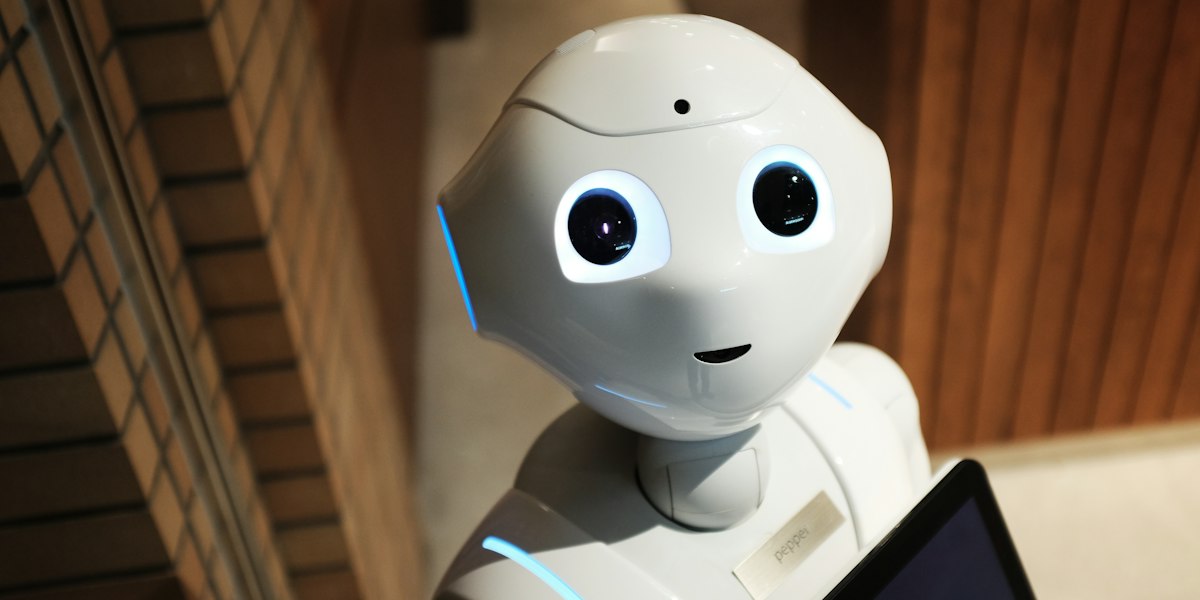
ChatGPT democratized access to powerful AI. It made technology that was previously available only to researchers and large companies accessible to anyone with an internet connection. It sparked conversations about AI's role in society, education, and work. It forced us to confront both the opportunities and challenges of artificial intelligence.
More than anything, ChatGPT changed expectations. Before ChatGPT, AI was something that might be important in the future. After ChatGPT, AI became something that was transforming the present. It showed that the AI revolution wasn't coming—it was already here. And that realization changed everything.
ChatGPT was a watershed moment. It made AI tangible and accessible in a way that nothing before it had. It showed the world what was possible, and there's no going back from that.
The story of ChatGPT is still being written. Every day, millions of people use it to learn, create, and solve problems. Every day, developers build new applications on top of it. Every day, researchers push the boundaries of what's possible. ChatGPT isn't just a product—it's a platform, a movement, and a glimpse into a future where AI and human intelligence work together to achieve things neither could accomplish alone.



Comments
Sign in to comment, like and save posts.
Sign inLoading comments…